The Prophetic Lifestyle: Integrating Spiritual and Physical Fitness for Success
DOI:
https://doi.org/10.55265/halalreviews.v5i1.150Keywords:
Prophetic Lifestyle, Holistic Well-Being, Spiritual Health, Mental Resilience, Islamic PracticesAbstract
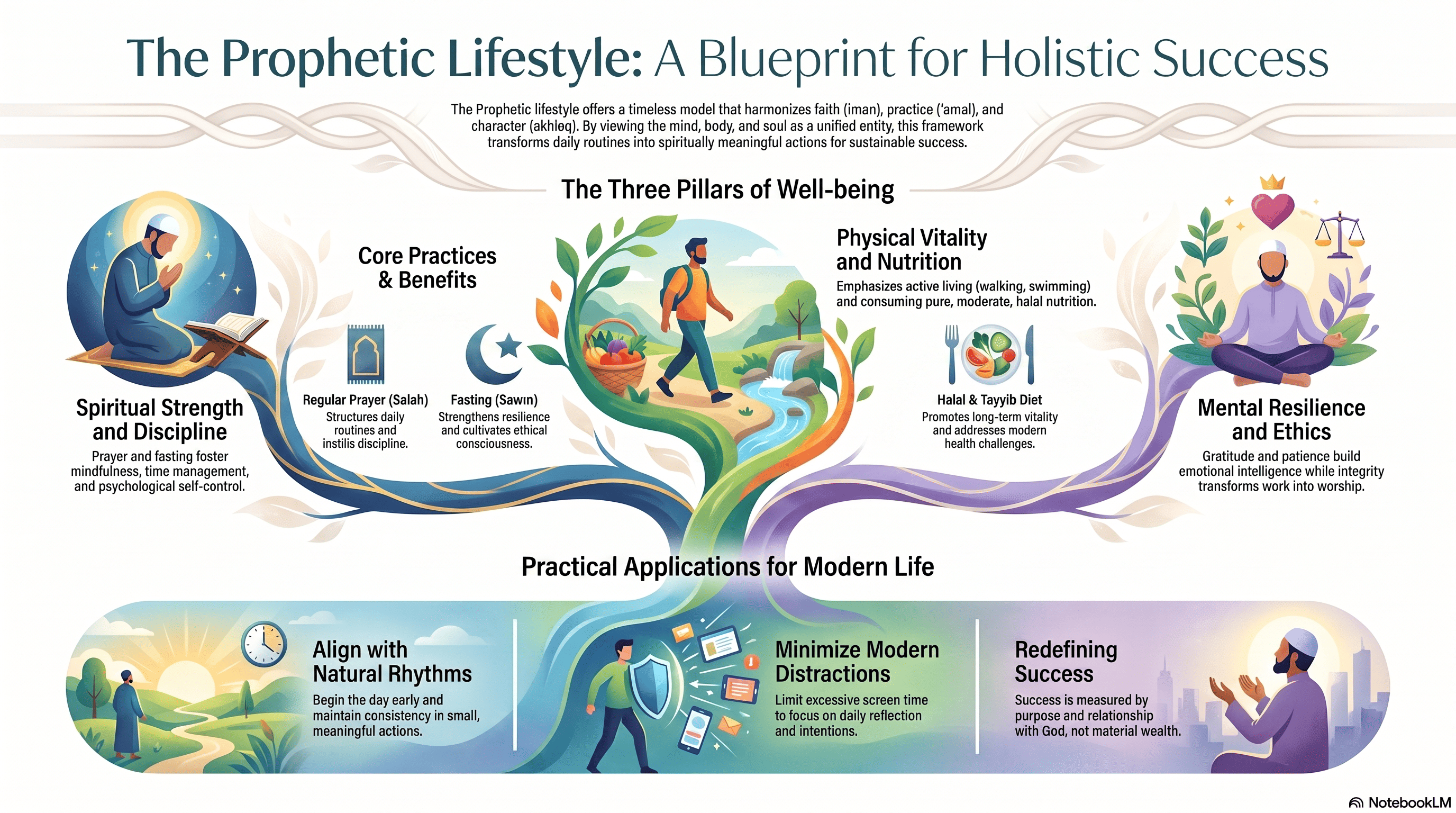
This study examines the prophetic lifestyle as a holistic framework integrating spiritual, physical, and mental well-being. It highlights how Islamic practices such as prayer, fasting, and ethical conduct contribute to discipline, resilience, and balanced living. Emphasizing the interconnectedness of mind, body, and soul, the study advocates a value-driven approach to productivity and success. The findings suggest that adopting prophetic principles fosters sustainable well-being, personal growth, and meaningful success in contemporary life.
Downloads
References
Abdulhameed, N. M. (2021). Ethical dimension of Maqasid al-Shari’ah and its implication to human capital development. IJISH (International Journal of Islamic Studies and Humanities), 4(1), 20. https://doi.org/10.26555/ijish.v4i1.2621
Ahmed, A. A. A., Komariah, A., Chupradit, S., Rohimah, B., Nuswantara, D. A., Nuphanudin, N., Mahmudiono, T., Suksatan, W., & Ilham, D. (2022). Investigating the relationship between religious lifestyle and social health among Muslim teachers. HTS Teologiese Studies / Theological Studies, 78(4). https://doi.org/10.4102/hts.v78i4.7335
Akbar, M. A. (2025). Living a balanced life and being an insan kamil: An Islamic perspective on worship, health, wealth, family and knowledge. International Islamic University Malaysia Repository. International Islamic University Malaysia.
Akyıldız, S. (2022). Traditional sports and games among Central Asia’s Turkic Muslim peoples, 1400 to 1850 AD: Training, hunting, and festivals. Vakanüvis Uluslararası Tarih Araştırmaları Dergisi, 7(2), 571–601. https://doi.org/10.24186/vakanuvis.1121265
Ali, M. A. M., Ariffin, M. F. M., & Hamid, M. F. A. (2024). Tayyiban diet recommendation according to the Sunnah in current discourse. International Journal of Academic Research in Business and Social Sciences, 14(2). https://doi.org/10.6007/IJARBSS/v14-i2/20557
Alsuhaymi, A. O., & Atallah, F. A. (2025). The role of ritual prayer (ṣalāh) in self-purification and identity formation: An Islamic educational perspective. Religions, 16(11), 1347. https://doi.org/10.3390/rel16111347
Anshory, J., Wijaya, H., Noviasty, R., & Joto, N. A. (2024). Integrating the Prophet’s diet in contemporary nutrition education to achieve sustainable health and wellbeing: A narrative review. Jurnal Kajian Peradaban Islam, 7(2), 98–104. https://doi.org/10.47076/jkpis.v7i2.327
Askar, W. (2024). Islamic spiritual well-being as a social determinant of diabetes physical and psychological health outcomes. Deep Blue, University of Michigan. https://hdl.handle.net/2027.42/196333
Bobinet, K., Burnette, J. L., Becker, W., & Rowell, M. (2025). Personal growth and wellbeing: An iterative mindset assessment and perspective. Behavioral Sciences, 15(7), 906. https://doi.org/10.3390/bs15070906
Christiyanto, W. W., Senen, S. H., & Rofaida, R. (2022). Islamic work ethics in Indonesia Islamic microfinance institutions: A bibliometric review and analysis. SHAHIH Journal of Islamicate Multidisciplinary, 7(2), 169–184. https://doi.org/10.22515/shahih.v7i2.5032
Csala, B., Ferentzi, E., Tihanyi, B. T., Drew, R., & Köteles, F. (2020). Verbal cuing is not the path to enlightenment: Psychological effects of a 10-session Hatha yoga practice. Frontiers in Psychology, 11. https://doi.org/10.3389/fpsyg.2020.01375
Drigas, A., & Mitsea, E. (2020). The triangle of spiritual intelligence, metacognition and consciousness. International Journal of Recent Contributions from Engineering Science & IT, 8(1), 4. https://doi.org/10.3991/ijes.v8i1.12503
Elgharbawy, A. A. M., & Azmi, N. A. N. (2022). Food as medicine: How eating halal and tayyib contributes to a balanced lifestyle. Halalsphere, 2(1), 86–97. https://doi.org/10.31436/hs.v2i1.39
Fakhrurrazi, F., Wasilah, N., & Jaya, H. (2023). Islam and knowledge: Harmony between sciences and faith. Journal of Modern Islamic Studies and Civilization, 2(1), 45–57. https://doi.org/10.59653/jmisc.v2i01.416
Gholami, A., Shokrpour, N., & Nikjah, J. (2021). Islamic approach to laziness. International Journal of Multicultural and Multireligious Understanding, 8(4), 335. https://doi.org/10.18415/ijmmu.v8i4.2555
Gillani, U., & Khan, M. J. (2025). Achieving our highest potential through character development (Husn-i-Akhlaaq): An Islamic perspective on holistic personality development, spiritual growth and human flourishing. Frontiers in Psychology, 16. https://doi.org/10.3389/fpsyg.2025.1569393
Hartono, H., Wiyani, N. A., & Nurfuadi, N. (2023). The theo-management model: An investigation into the implementation and impact of Islamic corporate culture at LP3I Purwokerto. Manageria: Jurnal Manajemen Pendidikan Islam, 8(1), 79–95. https://doi.org/10.14421/manageria.2023.81-05
Hussein, N. A.-H. K., Faiyyadh, S., & Sraih, N. (2025). Psychological resilience in the prophetic guidance: An educational reading of the hadith “Be keen on what benefits you.” Dragoman Journal of Translation Studies, 19, 238–260. https://doi.org/10.63132/ati.2025.resili.3079
Ibrahim, M., Islam, S., Zohriah, O., & Azid, M. (2024). Addressing contemporary ethical and moral issues through Islamic education. Journal on Islamic Studies, 1(1), 36–51. https://doi.org/10.35335/kbbzar83
Khan, W., Ali, A., Khan, S., & Yazdani, N. (2020). Islamic perspective regarding the promotion of health and participation in sports activities. Journal of Islamic Thought and Civilization, 10(101), 364–374. https://doi.org/10.32350/jitc.101.20
Maihula, J. S. (2025). Hadith and mental health: An analytical study of prophetic guidance on emotional well-being. Middle East Journal of Islamic Studies and Culture, 5(1), 97–102. https://doi.org/10.36348/mejisc.2025.v05i01.012
Mukri, M., Hanif, H., & Wakhid, A. A. (2024). Human resource ethics and professionalism: An Islamic perspective. KnE Social Sciences. https://doi.org/10.18502/kss.v9i16.16235
Nor, N., Imran, A., Islam, A., Moden, P., Abdel-Khalek, A., Al-Krenawi, A., Graham, J., Bryant, J., Iqbal, A., Koenig, H., Mte, S., Padela, A., Killawi, A., Forman, J., Demonner, S., Heisler, M., Ramasamy, V., Razali, S., & Hasanah, C. (2025). Holistic health and wellness: Integrating Islamic practices and modern medicine. Personalia Pelajar, 28(1). https://doi.org/10.17576/personalia.2801.2025.19
Qureshi, Z. (2025). An Islamic perspective on emotional intelligence: A thematic study of the Prophet Muhammad’s personality. Zenodo. https://doi.org/10.5281/zenodo.18042085
Saefudin, R., Sujana, A. M., Handayani, D., Nurelizah, N., & Nabhan, M. A. (2025). The leadership of Prophet Muhammad: A role model of politics and ethics in the modern era. EDUSOSHUM Journal of Islamic Education and Social Humanities, 6(1), 134–140. https://doi.org/10.52366/edusoshum.v6i1.238
Saritoprak, S. N., Exline, J. J., & Abu-Raiya, H. (2020). 20201218. Journal of Muslim Mental Health, 14(2). https://doi.org/10.3998/jmmh.10381607.0014.205
Surbakti, S. S. B., Harahap, R., & Hasanah, U. (2024). Future perspectives on the Islamic personality model: Integrating spiritual, moral, intellectual, social, personal, and behavioral dimensions for holistic development. Journal on Islamic Studies, 1(1), 17–35. https://doi.org/10.35335/7adqms82
Suwandi, S., & Awhinarto, A. (2026). Physical and spiritual health: Integration of the values of the Qur’an, Hadith, and health sciences. Journal of Applied Health Research and Development, 8(1), 50–58. https://doi.org/10.58228/jahrd.v8i1.155
Zaheer, I. E., & Lakhvi, M. H. (2025). Psychological healing through Islamic practices: A study of salah, fasting, and zakat. Al-Aasar, 2(3), 278–285. https://doi.org/10.63878/aaj1221
Zhang, G., Zhang, Q., & Li, F. (2024). The impact of spiritual care on the psychological health and quality of life of adults with heart failure: A systematic review of randomized trials. Frontiers in Medicine, 11. https://doi.org/10.3389/fmed.2024.1334920
Zuhri, A., Ramírez-Coronel, A. A., Al-Hawary, S. I. S., Dwijendra, N. K. A., Muda, I., Pallathadka, H., Amiruddin, M. M., & Sunarsi, D. (2023). Evaluation of the role of Islamic lifestyle in communication skills of Muslim couples. HTS Teologiese Studies / Theological Studies, 79(1). https://doi.org/10.4102/hts.v79i1.8185
Downloads
Published
How to Cite
Issue
Section
License
Copyright (c) 2025 Mohd Yusop Mohd Hazim

This work is licensed under a Creative Commons Attribution-NonCommercial-ShareAlike 4.0 International License.