Halal Production and Regulations in the UK
DOI:
https://doi.org/10.55265/halalreviews.v5i1.146Keywords:
Halal Meat Industry, United Kingdom, Slaughter practices, Halal Certification, Regulatory FrameworkAbstract
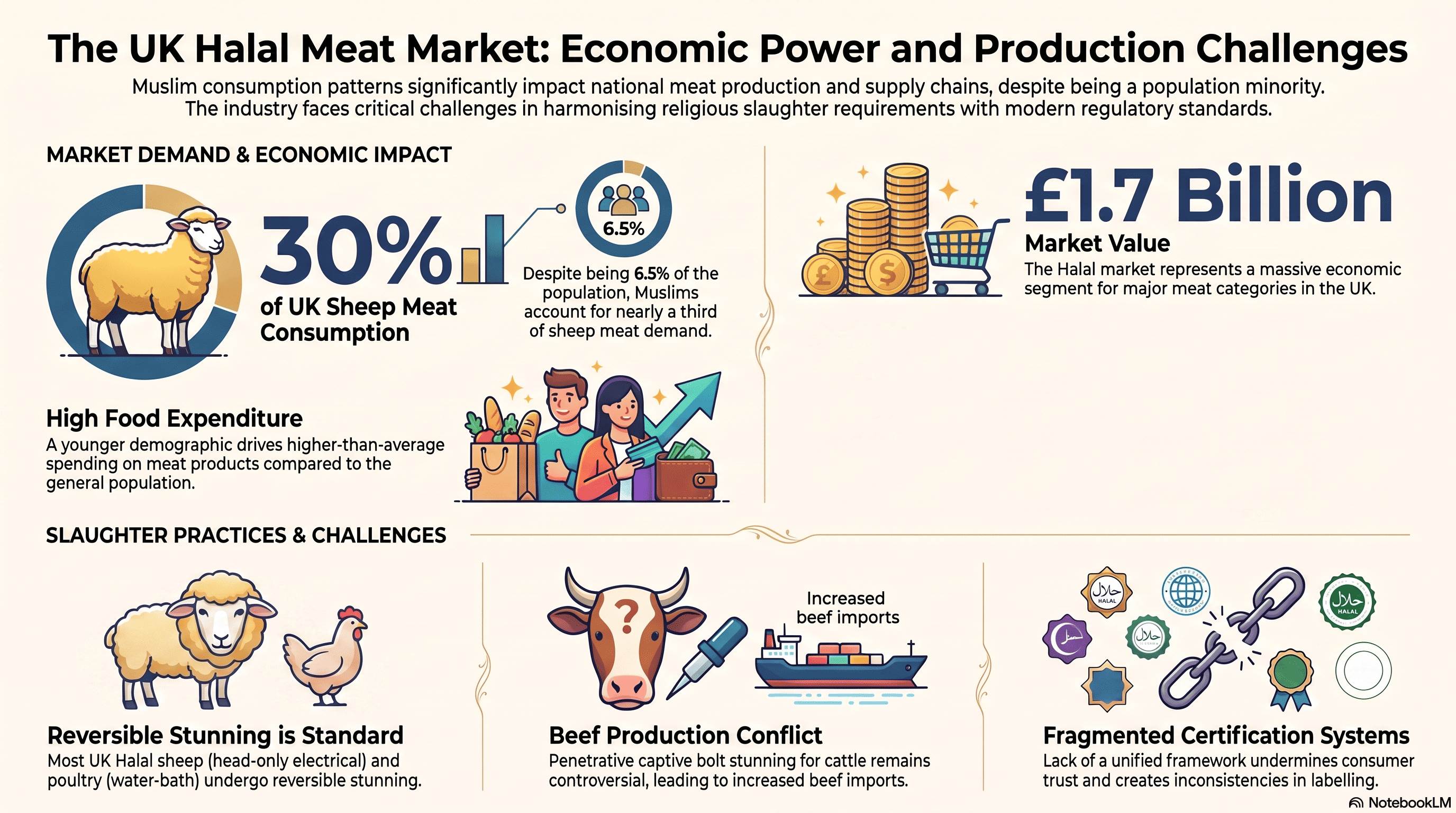
This study examines the structure and dynamics of Halal meat production in the United Kingdom, focusing on market demand, slaughter practices, and regulatory frameworks. It highlights the significant economic role of Muslim consumers and the diversity of certification systems that shape the industry. Key challenges include differing interpretations of slaughter methods, lack of standardization, and issues of consumer trust. The findings emphasize the need for stronger governance, harmonized standards, and stakeholder collaboration to ensure the sustainability and credibility of the Halal meat sector.
Downloads
References
A. (2021). The multiplicity of halal standards: A case study of application to slaughterhouses. Journal of Ethnic Foods, 8(1). https://doi.org/10.1186/s42779-021-00084-6
Aniqoh, N. A. F. A., & Hanastiana, M. R. (2020). Halal food industry: Challenges and opportunities in Europe. Journal of Digital Marketing and Halal Industry, 2(1), 43–54. https://doi.org/10.21580/jdmhi.2020.2.1.5799
Asfaw, H., Yigzaw, N., Yohannis, Z., Fekadu, G., Alemayehu, Y., & Innamorati, M. (2020). Prevalence and associated factors of suicidal ideation and attempt among undergraduate medical students of Haramaya University, Ethiopia: A cross sectional study. PLOS ONE, 15(8). https://doi.org/10.1371/journal.pone.0236398
Attwood, S., Jameel, S., Fuseini, A., Alkhalawi, E., & Hajat, C. (2023). Halal cultivated meat: An untapped opportunity. Frontiers in Nutrition, 10. https://doi.org/10.3389/fnut.2023.1196475
Azam, M. S. E., & Abdullah, M. A. (2020). Global halal industry: Realities and opportunities. International Journal of Islamic Business Ethics, 5(1), 47–59. https://doi.org/10.30659/ijibe.5.1.47-59
Boereboom, A., Sheikh, M., Islam, T., Achirimbi, E., & Vriesekoop, F. (2022). Brits and British Muslims and their perceptions of cultured meat: How big is their willingness to purchase? Food Frontiers, 3(3), 529–540. https://doi.org/10.1002/fft2.165
Islami, A., Bahar, A. A., & Nasih, I. (2024). The effect of slaughtering methods on meat imported from non-Islamic kingdom. VFAST Transactions on Islamic Research, 12(1), 135–164. https://doi.org/10.21015/vfast-tir.v12i1.1827
Knaapila, A., Chriki, S., Fang, F., Hocquette, J.-F., & Ellies-Oury, M. (2024). Food of the future: Meat and dairy alternatives. Frontiers Media. https://doi.org/10.3389/978-2-8325-4563-8
Moss, R., Kelly, B., Bird, P. K., & Pickett, K. E. (2023). Examining individual social status using the MacArthur Scale of Subjective Social Status: Findings from the Born in Bradford study. SSM - Population Health, 23, 101463. https://doi.org/10.1016/j.ssmph.2023.101463
Rahman, M. M., & Ahmad, Z. (2024). Ensuring halal product integrity and an investigative study of U.S policy practices. Journal of World Science, 3(1), 58–68. https://doi.org/10.58344/jws.v3i1.528
Ruzulan, Z., Jamaludin, M. A., & Ishak, A. H. (2021). Meat and meat-based products: Challenges and opportunities in halal food security. IOP Conference Series: Earth and Environmental Science, 756(1), 012017. https://doi.org/10.1088/1755-1315/756/1/012017
Downloads
Published
How to Cite
Issue
Section
License
Copyright (c) 2025 Awal Fuseini

This work is licensed under a Creative Commons Attribution-NonCommercial-ShareAlike 4.0 International License.